



Back to articles
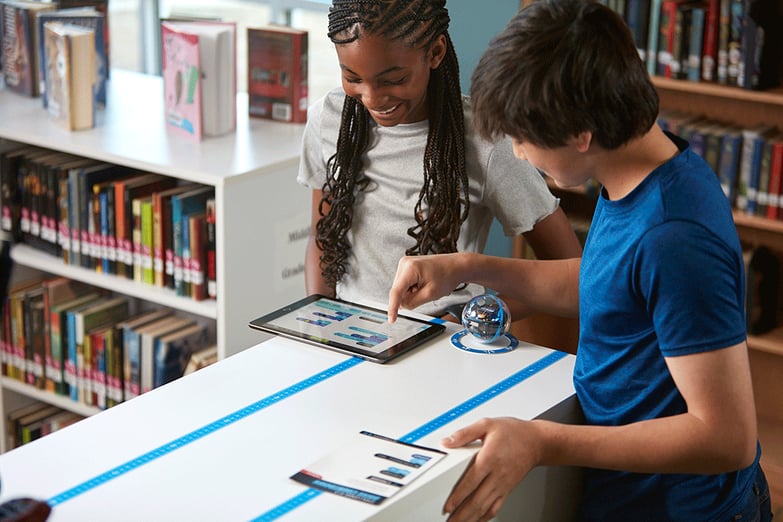
The classroom of today looks very different from the traditional lecture-style space of decades past. Picture students clustered around interactive tables, tablets or laptops connected wirelessly to sensors and data-loggers, teachers moving freely among the groups, and real-time feedback from student devices displayed on a shared screen or projected wall. And that’s just indoors; outside the potential for practical learning in the field is enormous.
Wireless networks have become the infrastructure that enables this fluid, dynamic learning space. In this modern environment, STEAM (science, technology, engineering, arts and mathematics) subjects are infused with digital tools, connectivity and collaboration, opening up new possibilities for hands-on investigation, data collection and creative exploration.
The shift towards digital education
Recent research supports this shift. For example, a working paper from the Organisation for Economic Co‑operation and Development (OECD) in 2025 concluded that digital technologies in primary and secondary education hold significant potential for enhancing teaching and learning processes, fostering student engagement, collaboration and self-regulated learning[1].
A survey of younger pupils found that 76 percent reported classroom technology made lessons more engaging, with teachers also observing increased participation – especially from pupils who might be more hesitant in conventional settings[2].
The modern classroom is not simply about 'more devices'. It is focused on interconnectivity between sensors, mobile apps, cloud dashboards, and analytics. That connectivity enables students to go beyond passive reception of information toward active generation of data, experimentation, peer-interaction and iteration. Whether it’s a biology class monitoring temperature or light levels in plant-growth experiments, or an engineering design project tracking motion and acceleration, wireless tools allow students to engage in STEAM in ways that were previously reserved for advanced labs.
Wireless tech brings learning advantages
Wireless technology has entered the classroom in many forms – including Wi-Fi-connected tablets, of course, but also Bluetooth LE sensors and probes, networked IoT devices embedded in experiment kits, and even mesh-networked modules scattered around the room.
These tools bring several advantages. First, they remove the bottleneck of having equipment fixed to one desk or one teacher’s computer. Students can walk around, take readings from different parts of the space, and collaborate freely.
Second, wireless technology supports real-time data collection and visualization. For example, a class investigating the impact of insulation materials on heat loss can deploy a network of wireless temperature probes around the room; students monitor the data on a tablet, discuss results and refine their experimentation. This kind of connectivity enhances student engagement and helps shift the teacher’s role from lecturer to facilitator.
Third, the scalability and flexibility of wireless networks make STEAM projects more accessible. Rather than requiring hard-wired sensors in one room, kit-based wireless sensors can be used by multiple classes, moved around the school, even carried to outdoor areas or field-sites. This aligns with research that shows digital technologies have a powerful effect when thoughtfully integrated into lessons.
The micro:bit enhances STEAM education
One standout tool in the digital-education ecosystem is the Nordic Semiconductor SoC-powered micro:bit, a pocket-sized computing device with built-in sensors that is widely used in classrooms globally. The micro:bit has become a gateway device for STEAM exploration, enabling learners to connect wireless sensors, mobile apps and data dashboards in a seamless way. For instance, a new professional development course enables teachers to use the micro:bit as a data logger, enabling experiments in temperature, light, sound and conductivity.
As part of the ‘do your :bit’ design challenge to help solve the UN’s Global Goals, students from all over the world create innovative solutions to address Sustainable Development Goals using technology and the micro:bit. Highlights presented at the 2024 do your :bit international showcase included: a project in Malaysia to continuously monitor for signs of landslides and forest fires using an accelerometer and temperature sensor; a project in Honduras to measure air quality with the purpose of raising awareness about environmental pollution; and a project in Taiwan that uses a micro:bit to integrate sensors and control UV light for disinfecting restroom environments.
A Nordic-powered educational robot
Meanwhile, educational technology company, Sphero, has recently launched an updated version of its smart robot designed to help students across a range of ages and ability levels learn how to code. Aimed at grades three to ten, BOLT+ can be programmed via an app to perform a variety of tasks, such as following a path, changing the colors of its lights, or updating its display, all using Nordic Bluetooth LE wireless connectivity.
The BOLT+ links with the user’s smartphone via the Nordic nRF5340 SoC’s 2.4 GHz multiprotocol radio. Once connected, students can use the Sphero Edu app to program the device to move, change the color of its lights, trigger light displays or matrix animations, illuminate the display, emit sounds, or combine multiple actions using if/then statements.
The device is powered by the nRF5340 SoC, which features dual Arm Cortex-M33 processors to provide ample computational overhead for the robot. It also uses the Nordic nMP1100 dedicated Power Management IC (PMIC) to help prolong battery life.
- Read more: Educating the next generation of coders
Nordic solutions support next-gen classrooms
At Nordic Semiconductor we believe wireless solutions are central to the future of digital education. Our next generation nRF54L Series multiprotocol SoCs deliver high-performance processing alongside Bluetooth 6.0 support and ultra-low power consumption, making solutions like the nRF54L15 SoC ideal for education-focused sensor arrays and connected devices. Furthermore, advanced chips like the nRF54L15 ensure battery life is maximized. And the ability to support future wireless protocols means schools can deploy technology now and scale as standards evolve.
As wireless tech becomes ubiquitous in the classroom, STEAM education stands to benefit. Institutions that invest in flexible wireless sensor networks and device ecosystems are enabling students not just to learn about science and technology, but to use science and technology as part of their learning process – collecting data, iterating designs, collaborating with peers, and presenting results. That aligns perfectly with the next-generation digital learning agenda.
References
- The impact of digital technologies on students’ learning. OECD, 2025
- Technology in Schools: A Teacher Survey. EdWeek Research Center survey, February 2023